Xreal Project Aura AR Glasses: The Future of Spatial Computing
A Major Leap Forward in Field of View Technology
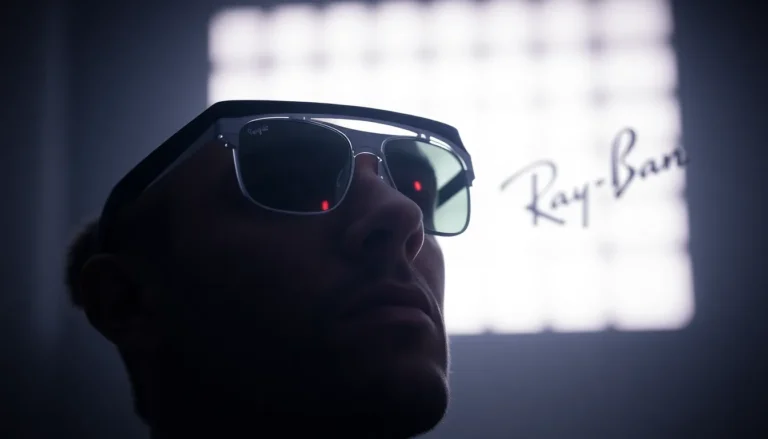
Xreal's Project Aura represents a significant advancement in augmented reality glasses design, primarily through its impressive 70-degree field of view—a notable improvement over the previous ceiling of 58 degrees set by competitors like Viture. This expanded visual window transforms the immersion experience, creating a genuine generational leap in how users perceive digital content overlaid on the real world.
The engineering behind this achievement is substantial. The device features massive prisms that, while showing some edge blurring, cleverly position this distortion toward peripheral vision where it's less noticeable. Rather than viewing content through camera feeds like traditional AR headsets, Project Aura lets users see the actual world with digital elements seamlessly layered on top—a crucial distinction that defines true augmented reality.
The glasses connect to a compute puck roughly the size of a smartphone, equipped with Qualcomm's Snapdragon processor (likely XR2 Gen 2 or newer) and a 4455mAh battery supporting 2-3 hours of typical use. With full 6 DoF tracking via side cameras and a central lens, the system maintains impressively stable virtual windows that users can walk around naturally, mimicking VR headset interactions while preserving real-world awareness.
Practical Performance and User Experience
During hands-on testing at Google I/O, Project Aura demonstrated surprisingly capable spatial computing capabilities powered by Android XR. The interface feels intuitive for anyone familiar with Samsung's Galaxy XR, utilizing intuitive pinch and drag gestures for navigation. What distinguishes this experience is the transparency advantage—users maintain contextual awareness of their surroundings while interacting with digital applications.
Multitasking functionality performed smoothly without noticeable lag, and creative applications shined particularly well. A music creation tool that combines air-drawing with Google's Gemini AI showcased the device's potential for collaborative and artistic workflows. Gaming experiences like Demeo, a tabletop D&D-style game, felt remarkably well-suited to the spatial format, suggesting strong future potential for entertainment applications.
A clever engineering detail includes auto electrochromic lens dimming, which instantly increases transparency when someone seeks the wearer's attention—enabling natural eye contact while wearing the device. However, users should understand that spatial computing interfaces inherently move slower than traditional computing devices. Gemini integration helps offset this limitation through voice-controlled navigation, making the overall experience more fluid and natural than current alternatives in the emerging AI Smart 4K Camera Glasses category.
Realistic Expectations and Future Outlook
While Project Aura clearly represents impressive technological progress, potential buyers should maintain realistic expectations about availability and pricing. The device is scheduled for release later this year, though manufacturers remain remarkably tight-lipped regarding final pricing. Industry observers speculate that sub-$1,000 pricing is unlikely, given that comparable devices like Samsung's Galaxy XR command premium pricing in the $2,000+ range.
The current iteration remains primarily suited for controlled indoor environments. Users shouldn't expect to wear these confidently in public without drawing considerable attention—they still have the appearance of oversized glasses with prominent optical elements. This limitation reflects the ongoing challenge in miniaturizing AR technology without sacrificing optical performance and immersion quality.
Despite these constraints, Project Aura succeeds as a compelling bridge between smartphone-based AR and full immersive VR experiences. It demonstrates that practical augmented reality computing is genuinely achievable at a wearable scale, validating the long-term vision of seamless spatial computing. As the technology matures across products like Ray-Ban Meta Smart AI Glasses and other Titanium AI Smart Glasses offerings, costs will likely decrease while capabilities expand, eventually making this technology accessible to mainstream consumers.
We are a participant in the Amazon Services LLC Associates Program, an affiliate advertising program designed to provide a means for sites to earn advertising fees by advertising and linking to Amazon.com. As an Amazon Associate I earn from qualifying purchases. We also participate in other affiliate programs.